In the world of sleep science, mattress ventilation is often an overlooked yet critical factor in achieving optimal rest. While most consumers focus on firmness or material composition, the ability of a mattress to breathe plays a pivotal role in temperature regulation, hygiene, and overall durability. A well-ventilated mattress doesn’t just prevent night sweats—it creates an environment where the body can maintain its natural thermoregulation cycles without interruption.
The human body sheds moisture during sleep, with studies suggesting an average person can lose up to a liter of fluid through perspiration each night. When a mattress lacks proper airflow, this moisture becomes trapped, creating a breeding ground for dust mites and microbial growth. Over time, the accumulated humidity breaks down mattress materials from within, causing premature sagging in memory foam or lumpiness in traditional spring coils. This is why high-end mattress manufacturers are increasingly incorporating advanced ventilation systems—from convoluted foam channels to graphene-infused cooling layers—as standard features.
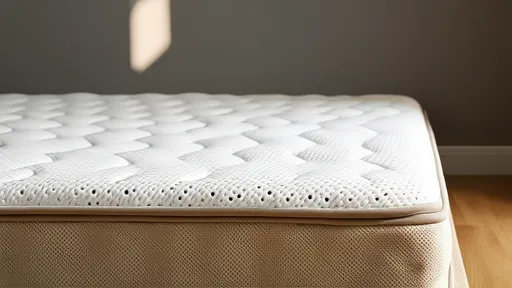
Material selection fundamentally dictates a mattress’s breathability. Traditional innerspring designs have always enjoyed natural airflow between their steel coils, but modern hybrid mattresses now combine this with perforated latex or aerated gel foams. Latex—especially natural Dunlop or Talalay varieties—contains open-cell structures that permit air circulation while maintaining support. Conversely, cheaper polyurethane foams tend to retain heat, which explains why budget mattress owners frequently report waking up drenched in sweat despite room temperatures being comfortable.
Climate considerations further complicate ventilation needs. Tropical regions with high humidity demand mattresses with enhanced airflow properties, often requiring breathable covers like organic cotton or bamboo-derived rayon. In arid climates, excessive ventilation might actually dehydrate mattress materials; some desert-dwelling consumers report memory foam becoming brittle over time. This geographical nuance has led to the rise of regional mattress customization—companies in Southeast Asia now offer coconut husk-infused bases, while Scandinavian brands integrate wool layers for moisture-wicking without overcooling.
The bed foundation acts as a ventilation partner. Even the most breathable mattress will underperform if placed on a solid platform bed without slats. Box springs, once considered standard, actually inhibit airflow compared to modern adjustable bases with wave-patterned slat systems. The German Schlafsysteme standard recommends at least 5cm between slats for optimal air exchange—a specification rarely advertised but crucial for preventing mold in damp environments. Some Japanese futon enthusiasts take this further by rotating and sun-drying their shikibutons weekly, a practice Western mattress owners might adapt through periodic upright leaning against walls.
Technological innovations are pushing mattress ventilation into new frontiers. Phase-change materials (PCMs) originally developed for NASA now appear in luxury mattresses, absorbing excess body heat during sleep’s initial warm-up phase and releasing it later when body temperature drops. Copper-infused fibers don’t just offer antimicrobial benefits—they enhance thermal conductivity, effectively turning the entire sleep surface into a heat dissipation system. Perhaps most intriguing are emerging biomimetic designs that replicate the ventilation patterns of plant leaves, with branching channel structures that optimize airflow without compromising structural integrity.
Maintenance rituals profoundly impact long-term ventilation efficacy. Vacuuming a mattress monthly removes skin particles that would otherwise clog air passages, while baking soda treatments help neutralize acidic sweat residues that degrade breathable fabrics. The controversial practice of mattress flipping—once standard for double-sided models—has evolved into rotational patterns for single-sided units to prevent permanent body impressions from obstructing airflow channels. European sleep clinics now recommend evaluating mattress ventilation as part of sleep hygiene education, with some prescribing ventilation-focused care routines for patients suffering from night sweats or allergic rhinitis.
As consumers become educated about sleep microenvironment management, mattress ventilation transitions from an engineering specification to a wellness essential. The next generation of sleep systems likely won’t just respond to body temperature but actively modulate their ventilation properties throughout the night’s various sleep cycles. This shift mirrors broader trends in architectural design toward dynamic airflow systems, suggesting our bedrooms may soon treat air circulation with the same precision as temperature control. For now, understanding a mattress’s breathability features remains one of the most practical ways to enhance sleep quality—no technology required.

By /Aug 15, 2025

By /Aug 15, 2025

By /Aug 15, 2025

By /Aug 15, 2025

By /Aug 15, 2025

By /Aug 15, 2025

By /Aug 15, 2025

By /Aug 15, 2025

By /Aug 15, 2025

By /Aug 15, 2025

By /Aug 15, 2025
By /Aug 15, 2025

By /Aug 15, 2025

By /Aug 15, 2025

By /Aug 15, 2025

By /Aug 15, 2025
By /Aug 15, 2025
By /Aug 15, 2025

By /Aug 15, 2025

By /Aug 15, 2025